

Pizza Dough Recipe — Homemade pizza can be a delightful experience, especially when you have a simple and reliable pizza dough recipe at your fingertips. Whether you are a seasoned cook or a complete beginner, making your own pizza dough at home doesn’t have to be complicated. In this guide, we will walk you through the easy homemade pizza dough recipe, along with tips, variations, and everything you need to know to create delicious pizzas that will impress your family and friends.
If you love this recipe, don’t miss our Zucchini Pasta
Why Make Homemade Pizza Dough?
There are numerous reasons to make your own pizza dough:
- Freshness: Homemade dough is fresher and can be customized to your liking. You can adjust the thickness of the crust, the flavor of the dough, and even the size of your pizza to suit your preferences.
- Quality Ingredients: You have control over the ingredients that go into your dough, allowing you to avoid preservatives and artificial flavors. This means you can choose organic flour, high-quality olive oil, and even add herbs or spices that you love.
- Cost-Effective: Making your own dough can be much cheaper than purchasing pre-made dough or takeout pizzas. A bag of flour, a packet of yeast, and a few pantry staples can yield several pizzas, making it a budget-friendly option.
- Fun Activity: It can be a fun activity to do with family or friends, allowing everyone to get creative with their toppings. Pizza nights can turn into great social gatherings where everyone participates in the process from dough-making to topping selection.
- Healthier Options: By making your own dough, you can create healthier versions by using whole grains, gluten-free options, or even incorporating vegetables into the dough itself.
Ingredients for Easy Homemade Pizza Dough
To make your own pizza dough, you will need the following ingredients:
- 2 ¼ teaspoons of active dry yeast (1 packet)
- 1 teaspoon of sugar
- ¾ cup of warm water (about 110°F or 43°C)
- 2 cups of all-purpose flour
- 1 teaspoon of salt
- 1 tablespoon of olive oil
These ingredients are the foundation of a traditional pizza dough, but feel free to experiment with additional components to suit your tastes. For instance, you may choose to add a pinch of garlic powder for extra flavor or use whole wheat flour for a different texture.
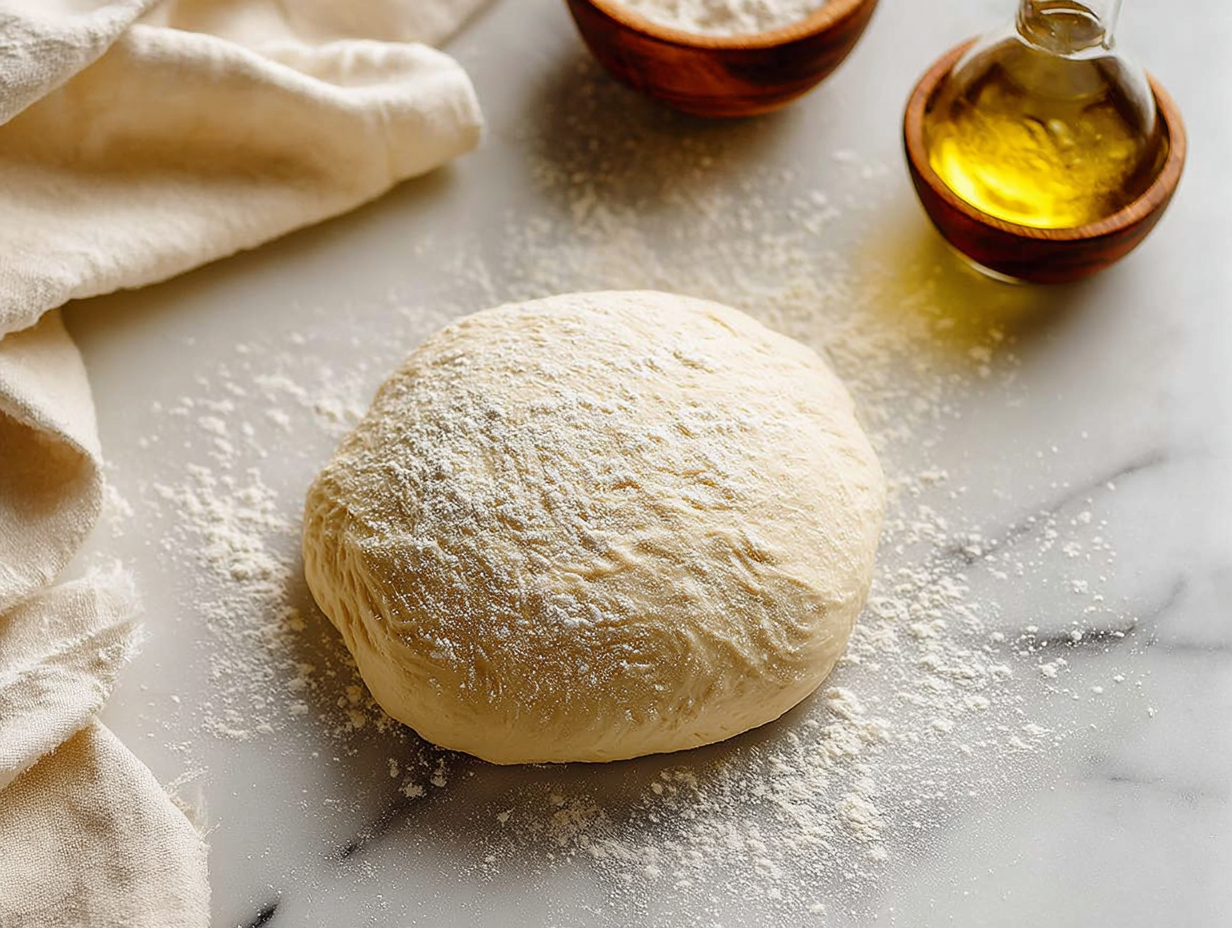
Step-by-Step Instructions for Making Pizza Dough
Step 1: Activate the Yeast
In a small bowl, combine the warm water, sugar, and yeast. Stir gently and let it sit for about 5-10 minutes until it becomes frothy. This indicates that the yeast is active. If your yeast doesn’t froth, it may be dead, and you should start over with fresh yeast. Activating the yeast correctly is crucial as it is the leavening agent that gives your dough its rise and airy texture.
Step 2: Mix the Dry Ingredients
In a large mixing bowl, combine the flour and salt. Mix well to distribute the salt evenly throughout the flour. Salt can inhibit yeast activity if not mixed in properly, so ensure it is evenly dispersed before adding the wet ingredients. Using a whisk can help aerate the flour and ensure an even mix.
Step 3: Combine Wet and Dry Ingredients
Once the yeast has activated, add it to the flour mixture along with the olive oil. Stir until the dough begins to form. The mixture should start coming together into a shaggy dough, and you may need to adjust the water or flour based on the humidity of your environment. If it feels too dry, add a little more warm water, but do so gradually.
Step 4: Knead the Dough
Transfer the dough to a floured surface and knead for about 5-7 minutes until it is smooth and elastic. If the dough is too sticky, sprinkle a little more flour as needed. Kneading develops the gluten in the flour, which gives the dough its structure and chewiness. You can tell the dough is ready when it springs back when you press your finger into it. This is a critical step, as proper kneading can make all the difference in the texture of your crust.
Step 5: Let the Dough Rise
Place the kneaded dough in a greased bowl, cover it with a kitchen towel, and let it rise in a warm place for about 1 hour or until it has doubled in size. If your kitchen is cool, you can turn on the oven for a minute to create a warm environment, then turn it off and place the dough inside to rise. This step is essential for developing the airy structure of the pizza crust.
Step 6: Shape the Dough
Once the dough has risen, punch it down to release the air. Divide the dough into portions (this recipe makes enough for 2 medium pizzas). Roll each portion into a ball and let it rest for another 10-15 minutes. This resting period helps relax the gluten, making it easier to shape the dough. If you prefer, you can also use this time to prepare your pizza toppings.
Step 7: Preheat the Oven
While the dough is resting, preheat your oven to 475°F (245°C). If you have a pizza stone, place it in the oven to heat up as well. A hot oven is crucial for achieving a crispy crust, so don’t skip this step! If you don’t have a pizza stone, a baking sheet will work, but ensure it’s hot when you place the dough on it for the best results.
Step 8: Roll Out the Dough
On a floured surface, roll out the dough into your desired thickness. For a thicker crust, roll it out less; for a thin, crispy crust, roll it out more. Transfer it to a pizza peel or baking sheet lined with parchment paper. Make sure to dust the surface of your peel or sheet with flour or cornmeal to prevent sticking. You can also use your hands to stretch the dough, which may give it a more rustic look.
Step 9: Add Toppings and Bake
Add your favorite pizza sauce, cheese, and toppings. Bake in the preheated oven for 12-15 minutes or until the crust is golden and the cheese is bubbly. Keep an eye on the pizza to prevent burning, especially if you are using a dark baking sheet, which can cook the bottom more quickly. For an extra touch, consider adding fresh basil or a drizzle of olive oil right after baking for added flavor and freshness.
Tips for Perfect Pizza Dough

- Use Warm Water: Make sure the water is warm, not hot, to avoid killing the yeast. The ideal temperature should be around 110°F (43°C), which feels warm to the touch but not hot.
- Kneading: Proper kneading is crucial for developing gluten, which gives the dough its structure. If you’re unsure, you can perform a windowpane test: stretch a small piece of dough; if it forms a thin, translucent membrane without tearing, it’s ready.
- Don’t Rush the Rise: Allowing the dough to rise properly is essential for a light and airy crust. If your dough isn’t rising well, it could be due to the yeast being old or the environment being too cold.
- Experiment: Feel free to experiment with different types of flour (like whole wheat or bread flour) for varied flavors and textures. You can also try adding spices or herbs directly into the dough for an extra flavor boost.
- Use a Pizza Stone: If you have one, a pizza stone can help achieve a crispier crust as it retains heat well. Preheating the stone ensures that the bottom of the pizza cooks evenly.
Variations on Easy Homemade Pizza Dough
Once you’ve mastered the basic pizza dough, consider trying some variations:
- Herbed Dough: Mix in dried herbs like oregano, basil, or garlic powder into the flour for added flavor. You can also use fresh herbs if you have them available.
- Whole Wheat Dough: Substitute half or all of the all-purpose flour with whole wheat flour for a healthier option. This will give the crust a nuttier flavor and a denser texture.
- Cauliflower Crust: For a low-carb alternative, consider making a cauliflower pizza crust. Simply pulse cooked cauliflower in a food processor, mix it with cheese and egg, and bake until firm. This option is not only healthier but also gluten-free.
- Beer Dough: Swap out the water for beer to add depth of flavor. The yeast in the beer will also help with the rising process, giving you an extra flavorful crust. This technique is popular among many pizza enthusiasts!
- Gluten-Free Dough: Use a gluten-free flour blend if you or your guests have gluten sensitivities. Make sure to add xanthan gum if it isn’t already included in the flour blend. This will help mimic the structure normally provided by gluten.
Storing and Freezing Pizza Dough
If you have leftover dough or want to prepare ahead of time, here’s how to store or freeze it:
Refrigeration:
Wrap the dough tightly in plastic wrap and store it in the refrigerator for up to 3 days. Allow it to come to room temperature before rolling it out. This will help the dough relax and make it easier to shape. Using an airtight container can also help maintain moisture and prevent the dough from drying out.
Freezing:
To freeze, wrap the dough in plastic wrap and then place it in a freezer bag. It can be frozen for up to 3 months. Thaw it in the refrigerator overnight before using. If you’re in a hurry, you can also let it sit at room temperature for a few hours. Just be sure to allow it to rise again after thawing, as this will improve its texture when baked.
Conclusion

Making your own easy homemade pizza dough is not only simple but also a rewarding experience that allows for creativity in the kitchen. With just a few basic ingredients and some patience, you can whip up a delicious pizza that suits your taste. So gather your ingredients, roll up your sleeves, and enjoy the process of creating homemade pizza from scratch! Don’t forget to involve your family or friends for a fun pizza-making night where everyone can create their own culinary masterpiece. The joy of sharing a pizza made from your own dough is an experience that is hard to beat, and the possibilities for toppings are endless. Embrace the art of pizza making and let your creativity shine!
Easy Homemade Pizza Dough: The Ultimate Guide

Homemade pizza can be a delightful experience with this simple and reliable pizza dough recipe. Perfect for beginners and seasoned cooks alike, this easy dough creates delicious pizzas that will impress your family and friends.
- Prep Time: 15 minutes
- Cook Time: 15 minutes
- Total Time: 1 hour 30 minutes
- Yield: 2 medium pizzas 1x
- Category: Bread & Dough
- Method: Baked
- Cuisine: Italian
- Diet: Vegetarian
Ingredients
- 2 ¼ teaspoons active dry yeast (1 packet)
- 1 teaspoon sugar
- ¾ cup warm water (110°F / 43°C)
- 2 cups all-purpose flour
- 1 teaspoon salt
- 1 tablespoon olive oil
Instructions
- In a small bowl, combine warm water, sugar, and yeast. Stir gently and let sit 5-10 minutes until frothy.
- In a large bowl, mix flour and salt.
- Add activated yeast mixture and olive oil to flour. Stir until dough begins to form.
- Knead on a floured surface for 5-7 minutes until smooth and elastic.
- Place dough in a greased bowl, cover, and let rise 1 hour until doubled in size.
- Punch down dough, divide into 2 portions, and let rest 10-15 minutes.
- Preheat oven to 475°F (245°C). Place pizza stone or baking sheet inside to heat.
- Roll out dough to desired thickness on a floured surface.
- Add sauce, cheese, and toppings. Bake 12-15 minutes until crust is golden and cheese bubbly.
Notes
For extra flavor, try adding herbs like oregano or garlic powder to the dough. Dough can be refrigerated up to 3 days or frozen up to 3 months.
Nutrition
- Serving Size: 1 slice
- Calories: 150
- Sugar: 1g
- Sodium: 220mg
- Fat: 3g
- Saturated Fat: 0.5g
- Unsaturated Fat: 2.5g
- Trans Fat: 0g
- Carbohydrates: 26g
- Fiber: 1g
- Protein: 4g
- Cholesterol: 0mg
Keywords: pizza dough, homemade pizza, easy pizza dough, italian crust
